
November 3, 2026
How the global move to mandatory reporting makes the alliance natural, necessary, and strategic
On November 10, the largest companies doing business in California will file their first mandatory greenhouse gas emissions reports under SB 253. Next year they will add Scope 3 and independent assurance. In Europe, the simplified CSRD now governs the largest companies operating there, with first reports under the revised standards due for financial year 2027. Thirty-five jurisdictions had adopted the ISSB standards by this summer, and more are following.
Most Corporate Sustainability leaders experience this as a compliance season, and it is one. But it is also something far larger, and I want to name it plainly:
The global move to mandatory reporting has made the CEO the Chief Sustainability Officer’s natural ally. Whether that alliance is formed is up to us.
The rules now require the enterprise to do what only a CEO can lead and what only a sustainability leader is equipped to organize: to set strategy, act on it, track it, manage it, and report it, across every relationship on which the company’s value depends. That makes the alliance natural, necessary, and strategic. It does not make it inevitable.
Corporate Sustainability’s moment, if we seize it
This is Corporate Sustainability’s moment, a full generation in the making. It began with the pioneers who built the Global Reporting Initiative in the late 1990s, continued through SASB, the TCFD, and the integrated reporting movement, and has now arrived in law and in capital market standards across much of the world. The people who built it, Bob Massie and Jean Rogers among them, did not want more paperwork. They wanted a more realistic, more adaptable understanding of the corporation and of how it creates value.
That intent can still be lost. If mandatory reporting is understood as compliance alone, it will be delegated to the controller, the general counsel, and a software platform, and Corporate Sustainability will be reduced to a data-collection function serving someone else’s strategy. The past year has shown how quickly the ground can shift: the EU’s Omnibus I narrowed the CSRD and removed the CSDDD’s obligation to adopt a climate transition plan, California’s climate risk law remains enjoined, and ISO’s draft net zero standard was sent back for revision. What survived every one of those debates is the core architecture: governance, strategy, materiality, and evidence. That architecture is an invitation. It will be accepted only by leaders who understand what it is for.
What the rules actually require
Governance. The European Sustainability Reporting Standards, IFRS S1 and S2, and the frameworks behind California’s climate laws all ask who oversees sustainability-related risks and opportunities, how the board and senior management are informed, and how those matters shape decisions and incentives. In other words, they ask what the CEO and the board do about them.
Strategy. Each asks how sustainability matters affect the business model, the strategy, and the company’s resilience over the short, medium, and long term, including any transition plan the company has. The CSRD adds double materiality: how the company affects people and the planet, not only how they affect it.
Evidence. Each requires a company to identify and prioritize what is material, manage it, and back its claims with data. California will require limited assurance over Scope 1 and 2 emissions from 2027, with reasonable assurance to follow.
Agency theory was no friend to CEOs
To see why this is a moment of leadership rather than burden, remember what came before.
For forty years, the dominant theory of the corporation held that managers are merely the agents of shareholders. Milton Friedman declared in 1970 that the social responsibility of business is to increase its profits. Michael Jensen and William Meckling’s agency theory followed, treating CEOs and boards as agents to be distrusted, monitored, and disciplined: by stock-based pay, by quarterly earnings, by the threat of takeover and activist campaigns. In that world, shareholders were in charge, not managers. The CEO became the custodian of a share price, judged quarter by quarter. Agency theory was no friend to CEOs or boards.
The multi-stakeholder theory of the firm, which R. Edward Freeman has taught for more than forty years, offers managers something better. It recognizes them as the leaders of value creation across every relationship the enterprise depends on: customers, employees, investors, suppliers, and communities, over the near, mid, and long term. That is what mandatory reporting now writes into disclosure and into law. I traced that history in The Relational Enterprise.
Here is the point too many in our field have missed. Corporate Sustainability matters only if it is understood as empowering managers, the CEO and the board above all, as the accountable masters of multi-stakeholder value creation in a world that has never needed it more. Understood that way, it is not a constraint on leadership. It is a painfully needed evolution of capitalism itself, and the CEO has every reason to welcome it.
Natural, necessary, and strategic
Natural. A CFO’s perspective is necessarily retrospective and custodial: what was earned, what was spent, what can be proven. A CEO’s perspective is forward-looking and relational. Read the strategy and resilience requirements of any major framework and you will find the CEO’s questions, not the controller’s. Where is the business model exposed? Which relationships will matter most in ten years? The rules have turned the CEO’s forward vision of multi-stakeholder value creation into a disclosure obligation, and the sustainability leader is the executive equipped to help the CEO meet it.
Necessary. Mandatory reporting draws on finance, legal, operations, procurement, investor relations, internal audit, and an external assurance provider. In most companies it is now carried by a cross-functional team, often a formal PMO. Someone must give that team its purpose and direction and hold every function to the same standard of evidence. That is a CEO’s mandate, and the governance disclosures ask the company to say so.
Strategic. A materiality assessment, done well, is a disciplined map of the stakeholders on whom the enterprise most depends. Every management technique depends on context and purpose, but in our experience the most effective sustainability leaders focus first on the most sought-after members of each stakeholder community: the customers every competitor wants, the talent every company is recruiting, the investors with the longest horizons, the suppliers that cannot be replaced, and the communities that grant the license to operate. Customers come first, because they are where a CEO’s vision meets the market and becomes commercial value. Scenario analysis does the same work across time, testing strategy against the science of climate and environmental breakdown. Imagine bringing your CEO a clear account of how your most sought-after customers, talent, and investors respond to the CEO’s purpose and direction, grounded in data your auditors will test. No software platform can produce that account.
Why now: a world on fire, as the age of agentic AI dawns
Two forces make this urgent. The first is the accelerating reality of climate and environmental breakdown, which no plan can fully anticipate. Enterprises that endure will sense change through their relationships, across continents and cultures, and respond together.
The second is artificial intelligence. AI agents will soon gather, reconcile, and draft much of what these regimes require. They will not decide what the enterprise is for, which relationships matter most, or what trade-offs to make. Those are questions of leadership, not computation. As AI takes on more of the work, someone must govern it, validate its outputs with human judgment, and keep the company’s claims honest. The sustainability leader who helps the CEO govern both the data and the machines becomes more valuable, not less.
Five moves to seize the moment
1. State the CEO’s forward vision in one line. Write down your CEO’s purpose and direction across the near, mid, and long term, as the CEO would say it, and connect your sustainability strategy to it explicitly.
2. Use the governance disclosures to formalize the alliance. Help the CEO and board define who oversees what and how sustainability shapes decisions and incentives. Write the alliance into the governance you report.
3. Turn materiality into priorities, customers first. Identify your most sought-after stakeholders and bring the CEO’s vision to them, beginning with your most sought-after customers.
4. Make scenario and transition planning the CEO’s planning. Treat resilience analysis and any transition plan as inputs to strategy and capital allocation, not exhibits prepared after the fact.
5. Build audit-ready data, and govern your AI. Design controls an assurance provider will accept, and validate any AI system that touches your disclosures with human judgment. Then you can call the audit meeting, rather than be called into it.
How SR Inc helps
For more than fifteen years, SR Inc has helped Corporate Sustainability leaders at global operating companies ally their work with their CEO’s forward vision. Our Strategic Roundtable Member Advisories on Vision, Governance, Strategy, Scenario Planning, and Transition Planning help leaders make each of these moves.
Our Comprehensive Compliance Collaborative for Mastering Mandatory Reporting provides human expert-led, week-over-week support, with Member Advisories on the CSRD, IFRS S1 and S2, and California’s climate laws, and interoperable Tools that let one body of work meet many requirements. Our experts are supported by our emerging Shared Roundtable Agent, which tracks regulatory and standards change continuously so they can spend their time where judgment matters most.
Seize it
Mandatory reporting did not create the alliance between the CEO and the sustainability leader. It made that alliance possible, and necessary, at the very moment the world most needs it. It will not form on its own. It will be formed by sustainability leaders who refuse to let a generation’s work be reduced to compliance, and by CEOs who recognize that it returns to them what agency theory took away: the authority and responsibility to lead the creation of value with and for everyone the enterprise depends on.
At the center of that work is something deeply personal and profoundly relational: the recognition that every stakeholder, across every continent and culture, has a dignity that cannot be earned or revoked, only honored. Enterprises built on that recognition sense change sooner, adapt together, and create value that lasts. That is how business aligns with life. This is our moment to help it happen.
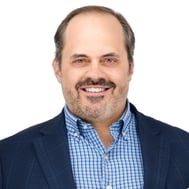 James F. Boyle, Founder and CEO, Sustainability Roundtable, Inc.,
and author of Dignity First Leadership: Developing & Driving a World-Class Sustainability Strategy